March 3rd, 2017
Affirmation: Understanding and respecting my limits, I can learn to say no to what might jeopardize my serenity and wellbeing.
Word of the Day: hydra (n):
_____
Too Much
The paradoxical corollary of feeling not enough (see yesterday's post!), is feeling like too much at the same time...
"We have all had the experience, as children, of being too much for someone; of making someone feel things that they didn't want to feel…. Before we acquire the limiting and limited excesses of language we have lived with the excesses of need. If, even only occasionally as a child, you are too much for your parents—which then means you are too much for yourself—what can you do?"
This feeling of being too much "in our
hungers and our desires, in our griefs and our commitments, in our loves and
our hates" is because of the gap between who we are and the "picture
we have of ourselves." Thus, we spend much of our lives attempting to reconcile the
two. Philipps suggests that we might ultimately be much better served by coming to terms with and accepting this reconciliation process as something nature and lifelong.


Affirmation: Understanding and respecting my limits, I can learn to say no to what might jeopardize my serenity and wellbeing.
Word of the Day: hydra (n):
1. a persistent or
many-sided problem that presents new obstacles as soon as one aspect is solved.
The Tent
Outside, the freezing desert night.
This other night inside grows warm, kindling.
Let the landscape be covered with thorny crust.
We have a soft garden in here.
The continents blasted,
cities and little towns, everything
become a scorched, blackened ball.
The news we hear is full of grief for that future,
but the real news inside here
is there's no news at all.
Outside, the freezing desert night.
This other night inside grows warm, kindling.
Let the landscape be covered with thorny crust.
We have a soft garden in here.
The continents blasted,
cities and little towns, everything
become a scorched, blackened ball.
The news we hear is full of grief for that future,
but the real news inside here
is there's no news at all.
_____
Too Much
The paradoxical corollary of feeling not enough (see yesterday's post!), is feeling like too much at the same time...
"I must learn to love the fool in me - the
one who feels too much, talks too much, takes too many chances, wins sometimes
and loses often, lacks self-control, loves and hates, hurts and gets hurt,
promises and breaks promises, laughs and cries." ~ Theadore Isaac Rubin
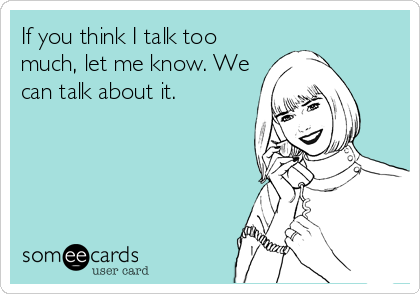
I share in a far too common experience I've heard from countless amazing women. I was an intense, curious, creative child who internalized the message that part of growing up means toning yourself down. I have since strived and struggled to live up to this expectation but still fear that I'm "too much."
In the process of toning myself down, I learned to tune myself out and disconnect myself from my body and my gut. Like many others who've gone down this path, over time this has led to my feeling lost and developing chronic pain (physical and psychological). I've pushed myself beyond my limits and have ultimately lost sight of who I truly am.
I live a shame of psychic excess, one that cannot be reduced to a singular habit or thought or oddity or incident. Instead, I live with the chronic, unshakable, impenetrable malaise of feeling that I am too much of everything. I am propriety and appropriateness gone awry, what would otherwise be perfectly respectable habits and traits taken to the extreme: I feel that I talk too much, think too much, feel too much, reveal too much, laugh too much... that I am too much. In short, overkill personified.
Author Adam Phillips, in his book On Balance, writes:
"We have all had the experience, as children, of being too much for someone; of making someone feel things that they didn't want to feel…. Before we acquire the limiting and limited excesses of language we have lived with the excesses of need. If, even only occasionally as a child, you are too much for your parents—which then means you are too much for yourself—what can you do?"
Philipps goes on to assert that too-muchness is an inherent and inescapable part of the human experience. He concludes that human beings begin their lives saturated in intense feelings and that with age, we learn to find ways to control that shameful act known as "overreacting." Philipps writes, "We are too much for ourselves because
there is far more to us—we feel more—than we can manage."
In short, there are some discomforts in our lives that we not only can - but should - live with. The feeling of too-muchness is one of them. In many ways, we can think of this feeling as a glorious reminder of our exquisite delicateness, of chances taken, and of a life well lived.


This is a beautiful articulation of something I've often felt and never fully recognized.
ReplyDeleteThank you! I've often found that though I struggle to put words to many of my thoughts, feelings, and sensations, even my attempts to do so bring clarity to experiences that would otherwise never see the light of day.
DeleteJournaling about it puts it in the clear light of day when we can look at things more clearly and choose wisely in line with our goals.
ReplyDeleteI think that putting your thoughts into words - or out loud, which can be even more powerful - really helps with diffusion and allows you to evaluate them "in the light".
Delete