June 29th, 2017
Affirmation: I get adequate rest, exercise, and nourishment.
Fears and doubts get smaller when I talk about them.
Today I am willing to let go of all the negative tapes that I hear.
Word of the Day: trothplight (n):
1. 'No' as a complete sentence.
2. Vague but firm.
3. Referral/ Delegation.
6. Gratitude
7. It's Not Whether, But When
9. Word Of Mouth Is The Best Recommendation
10. Someone Else Asked First/ Family
11. Know Thyself
12. Time To Assess
14. The Pressure Valve


Affirmation: I get adequate rest, exercise, and nourishment.
Fears and doubts get smaller when I talk about them.
Today I am willing to let go of all the negative tapes that I hear.
Word of the Day: trothplight (n):
1. engagement to be
married; betrothal.
2. to betroth.
3. betrothed.
expostulate
(v):
1. to reason
earnestly with someone against something that person intends to do or has done;
remonstrate: His father expostulated with
him about the evils of gambling.
animus (n):
1. a usually
prejudiced and often spiteful or malevolent ill will
2. basic attitude or
governing spirit : disposition, intention
3. an inner
masculine part of the female personality in the analytic psychology of C. G.
Jung
Inside This River
Inside this river there is a moon
which is not a reflection.
From the river bottom the moon speaks.
I travel in continuous conversation
with the river as it goes.
Whatever is above
and seemingly outside this river
is actually in it.
Merge with it, in here or out there,
as you please.
This is the river of rivers
and the beautiful silence of endless talking.
The Miracle Signs
Here are the miracle-signs you want,
that you cry through the night
and get up at dawn asking.
that in the absence of what you ask for,
your day gets dark, your neck thin
as a spindle, that what you give away
is all you own, that you sacrifice belongings,
sleep, health, your head,
that you often sit down in a fire like aloeswood
and often go out to meet a blade
like a battered helmet.
When acts of helplessness become habitual,
those are the signs.
Excuse my wandering.
How can one be orderly with this?
It is like counting leaves in a garden,
along with the song-notes of partridges
and crows. Sometimes organization
and computation become absurd.
The Self We Share
Look fish, you are already in the ocean.
Just swimming there makes you friends with glory.
What are these grudges about?
You are Benjamin.
Joseph has put a gold cup in your grain sack
and accused you of being a thief.
Now he draws you aside and says,
You are my brother. I am a prayer. You are the Amen.
We move in eternal regions,
yet we worry about property here.
Let this be the prayer of each:
You are the source of my life.
You bring rivers from the mountain springs.
You brighten my eyes.
The wine you offer takes me out of myself
into the self we share.
Doing that is religion.
_____
Ways To Say No
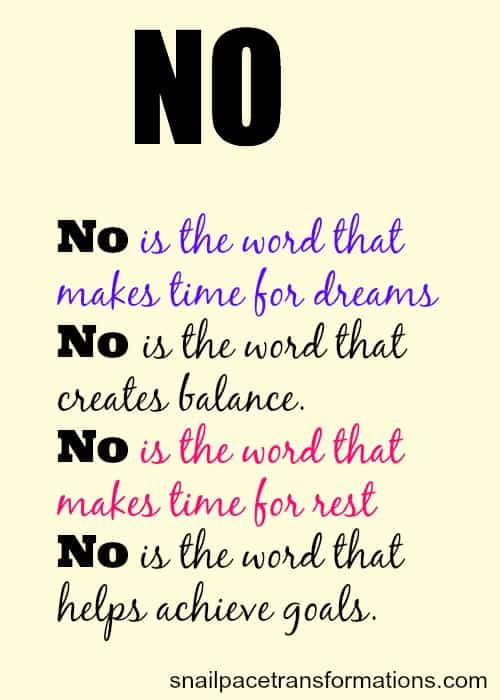
As I wrote in my last post, learning how to say No is incredibly important in our lives. Doing so helps us maintain healthy boundaries and relationships with others and ourselves and also allows us to be more thoughtful and committed to the things we say Yes to. In spite of understanding the benefits of being able to say No when needed, many people (myself included) continue to struggle with actually doing so. Here are some suggestions to help you master the art of saying No that you can put into practice today (I've included an example with each one, but feel free to put them into your own words):
1. 'No' as a complete sentence.
“No, thank you" or "No, thank you. I won't be able to." (Say it, don't apologize, then shut up.)
2. Vague but firm.
"Thank you for asking me, but that is not going to work for me."
3. Referral/ Delegation.
"I won't be able to, but why don't you ask Joe? I bet he'll be able to."
4. Last Minute Boundary
"I can't add anything onto my calendar this month, but the next time you're planning to go _____, let me know as soon as you can because I would love to go with you."
5. It's Not Personal
"Thank you for thinking of me, but I am not doing any interviews this quarter while I am focusing on starting my new project."
6. Gratitude
I'm so touched that you thought of me and I really appreciate your enthusiasm and support. I'm sorry I won't be able to help out at this time."
7. It's Not Whether, But When
"I would like to, but I am unavailable until August. Could you ask me again closer to that time?" OR “None of those dates work for me, but I would love to see you. Send me some more dates.”
8. Gracious
"I truly appreciate your asking, but my time is already committed."
9. Word Of Mouth Is The Best Recommendation
"I won't be able to, but let me recommend someone to you who would be able to help you."
10. Someone Else Asked First/ Family
"I already told my partner/ therapist/ coach/ etc. that I would not be taking on more at this time. I am working to create a more balanced life." OR "That is the day of my son's dance recital, and I never miss those.”
11. Know Thyself
"No. But here is what I can do...." (then limit the commitment to what works for you.)
12. Time To Assess
"Let me think about it and I will get back to you."
13. Give Others A Chance
“You know, I feel like the accounting department is always organizing the office fundraisers/ parties. Let’s ask the Marketing Department to help this year.”
14. The Pressure Valve
Author Katrina Alcorn shares: "We need a ‘safety word’ for saying no—an easy way to tell people that we can’t/won’t do the thing they are requesting, but that it’s not personal. One convenient thing about authoring a book called Maxed Out is that now I can say ‘I’m maxed out’ and people who are familiar with the book know I’m asking them to respect that I’m taking care of myself, and that I also respect their need to take care of themselves.”
Remember, just because you are available to do something or can do something, does not mean that you ought to. When asked to do or commit to something, ask yourself, "Do I want to do this thing, or is it that I feel I “should”? Will saying “yes” bring me joy or meaning? Or will I feel dread or regret when this particular event or task rolls around?"
If you realize that you want (and need!) to say No, try experimenting with some of the suggestions above to see which one(s) work best for you (remember that certain ones work better with certain people and/or with particular circumstances).
As always, I would love to hear your feedback about what has worked or not worked for you in terms of saying no. And, perhaps more importantly, what are the things (and people) you would like to start saying Yes to more often?